
Conservation At Camp: Fire Mitigation & Fuels Management at the Bar 717 Ranch
Welcome back to the second installment of our #ConservationAtCamp series! Today we’ll be deep-diving into the first element of our land stewardship practices at the Bar 717: wildfire, fire mitigation, and fuels management.
Wildfire & Forest Management in California
As we briefly discussed in last week’s introduction post, wildfire is a reality here, something that’s as native to the landscape as the pine trees and rivers. Nearly all of California’s ecosystems are either fire-dependent or fire-adapted, meaning that these ecosystems either rely on occasional wildfire to remain healthy or have evolved to survive wildfire. Wildfire can be a destructive force, but it is also a necessary part of our ecosystems, playing an essential role in supporting biological diversity and soil health.
Human involvement in the management of wildfire is also nothing new: for millennia, the Indigenous people in this region have coexisted with wildfire and used it as a tool to manage the landscape, promoting healthy ecosystems and reducing the risk of catastrophic, destructive fires. This is a practice known as “cultural burning” – lighting small, controlled fires to promote the health of forests and vegetation, particularly flora and fauna that provided things like food or clothing.
However, there is a major difference between the role wildfire has played in this region’s past and the reality of wildfire here today. Like all living bodies, ecosystems thrive on balance; if that balance is disturbed, things can go awry. In California, they most certainly have, with wildfire intensity and severity dramatically increasing since the 1980s and into the 2000s.
So what happened? The simplified answer is a combination of the forest management techniques of the 1900s and the increasing impacts of climate change. Beginning in the early 20th century, catalyzed by several severe wildfire seasons and motivated by a desire to protect timber stands for the logging industry, the newly minted United States Forest Service (USFS) instituted a policy of wildfire suppression. This policy had no room for the “light burning” that was favored by some farmers, ranchers, and foresters as a tool to improve landscapes, similar to cultural burning. Instead, it advocated for total fire suppression through the 10 AM policy: aiming to have all new wildfires under control by 10 AM the following day. This policy remained in place until the 1970s, when an increasing awareness of the ecological role of fire began shifting institutional practices within the USFS.
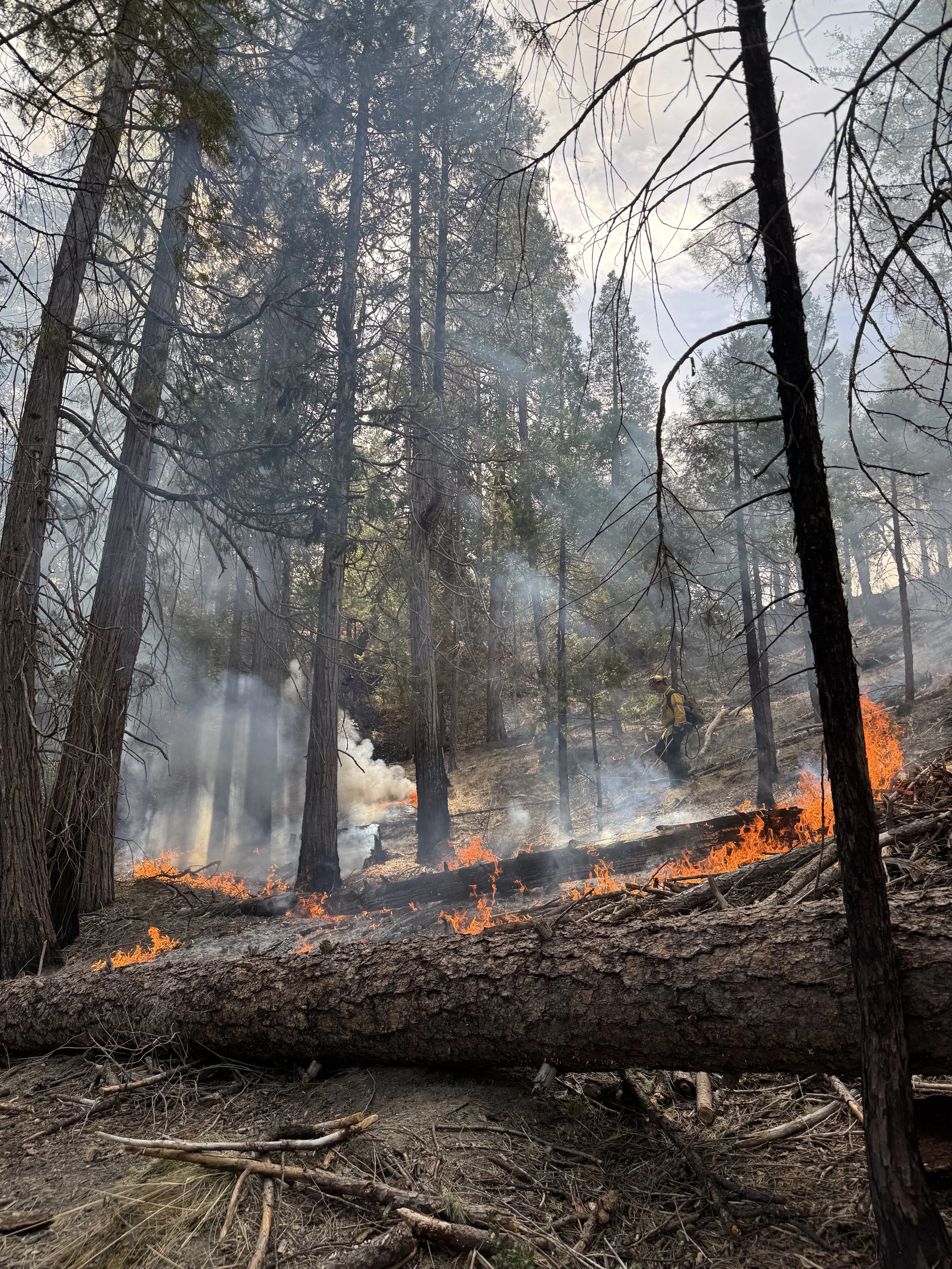
However, the damage had already been done, with forests across the nation experiencing a heavy accumulation of fuel that in previous centuries would have burned off in smaller, less intense fires. Combined with the growing impacts of climate change – characterized by hotter and dryer weather patterns in California and the disruption of natural cycles that benefitted destructive pests such as bark beetles – this resulted in ecosystems across the state that were primed for increasingly frequent and severe wildfires.
Knowing that our region faces the reality of wildfire and desiring to protect and nurture the land we steward, what is the best path forward? For us, the answer has been in the steady work of decades of fuels management, guided by a holistic understanding of the benefits of fire as a tool and supported by partnerships with both federal and local agencies.
Our Projects & Partnerships
In 1999, we began working closely with the California Department of Forestry and Fire Protection (CAL FIRE) to survey the ranch and build out a comprehensive environmental management plan. CAL FIRE’s forester-led review of the property produced a guiding document that outlined our central concerns and informed many later projects. Unsurprisingly, the review concluded that the primary opportunities for this work are related to fire mitigation and preparedness, as well as water quality (more on that next week).
As part of our initial work with CAL FIRE, we focused on reducing the ranch’s fuel load — the amount of combustible material present, such as dead wood, vegetation, or other forest litter. This meant extensive brush clearing across the property, while also working on other restoration projects such as replanting previously logged areas and repairing ranch roads. These projects and CAL FIRE’s overarching survey became the backbone of our land stewardship plan, and launched us into partnerships with other agencies, including the Natural Resources Conservation Service (NRCS) & the Trinity County Resource Conservation District (TCRCD). In the early 2000s, many of our larger, ongoing projects were done with the support of the NRCS and TCRCD: continued fuels reduction and brush clearing as well as road improvements and maintenance, pasture replanting, and water pipeline extensions for irrigation (which also serve as an important element of our fire preparedness at the ranch).
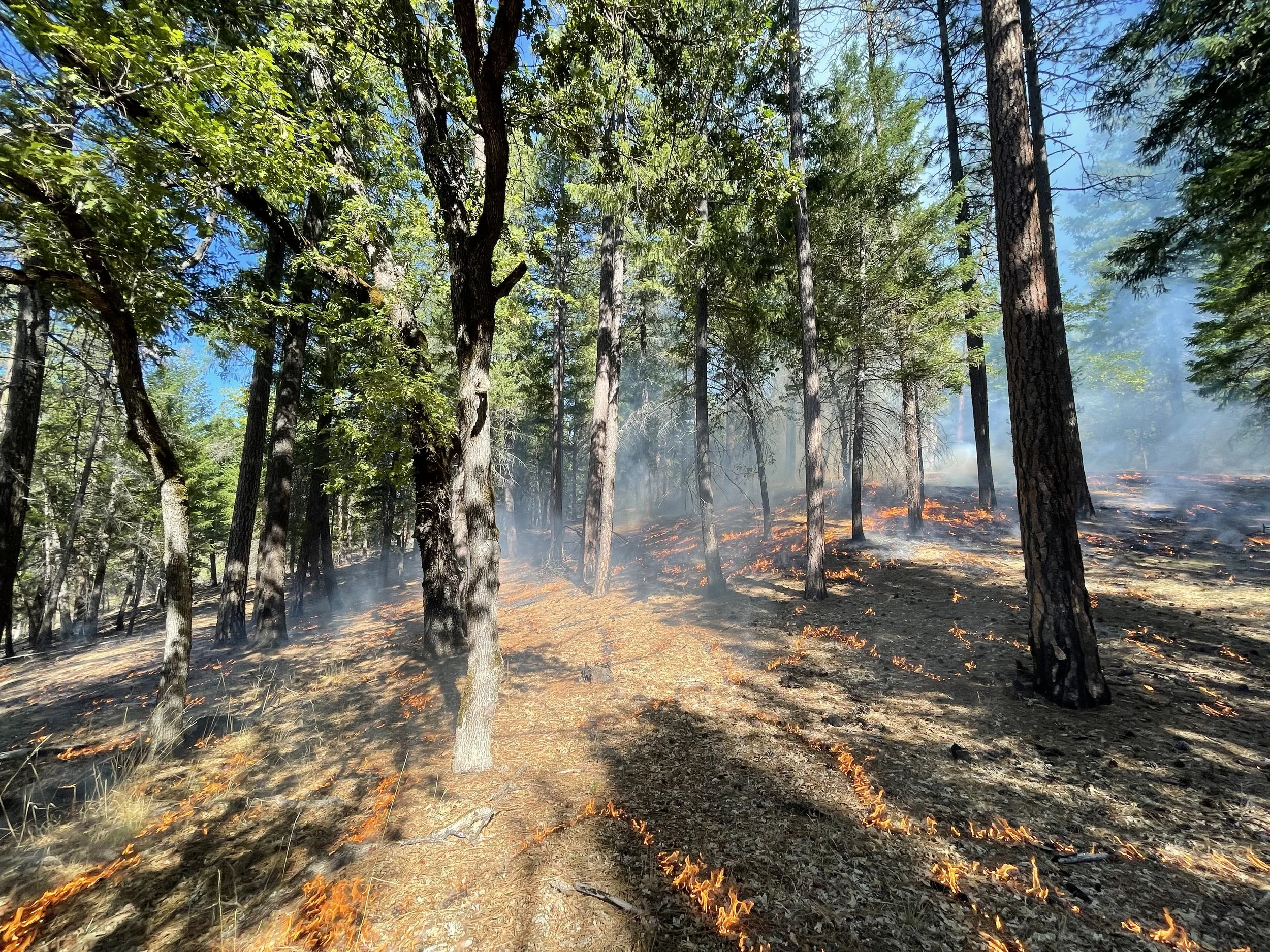
We continued to work on fuels reduction across the Bar 717 well into the first decade of the 2000s. In 2008, an experience with a nearby wildfire catalyzed us to expand our approach to fire mitigation and fuels management. The 2008 Miner’s Fire burned nearly 40 acres between the Bar 717 and Hayfork, and we were able to witness firsthand the containment work carried out by Forest Service firefighters – most notably, “backburns”, or intentionally-set controlled fires that consume fuel to stop or slow the spread of wildfire. Following the Miner’s Fire, we were also able to observe the long term effects of the fire on the landscape. Though there was damage to some parts of the forest, the burned areas (and particularly burned areas where we had already carried out previous fuels reduction work) looked fantastic: healthy and resilient. As a result, we became interested in carrying out prescribed burns on the property, and through the NRCS we connected with The Watershed Research and Training Center (WRTC).
Located in Hayfork, just 17 miles down the road from the ranch, the WRTC is a non-profit organization that provides a wide range of land management services, from water quality monitoring to fire management; we recommend digging into the WRTC’s website to learn more about their truly impressive work.
Like cultural burning, the “light burning” of the 20th century, and the backburning techniques used by wildland firefighters, prescribed burning involves the intentional lighting of low-intensity, controlled fires in an area to reduce fuel load, mitigate the future risk of higher-intensity fires, and improve the health and resiliency of the forest. As slow-moving prescribed fire removes dead organic debris from the forest floor, nutrients are released from the burned material back into the soil, increasing soil fertility. With less debris and healthier soils, newer or smaller plants are free to grow, and in some cases, the fire itself promotes plant growth: some species of pines, for example, rely on the heat of fires to release seeds from pinecones (remember – almost all of California’s ecosystems are either fire-dependent or fire adapted!). The more we learned, the more prescribed burning made sense: in addition to its positive effects on the health of the forest and soils, it’s a great way to more easily expand and maintain the previous fuels reduction work we’d done by hand, and it’s more effective at removing brush to increase forage for horses, cows, and wildlife.
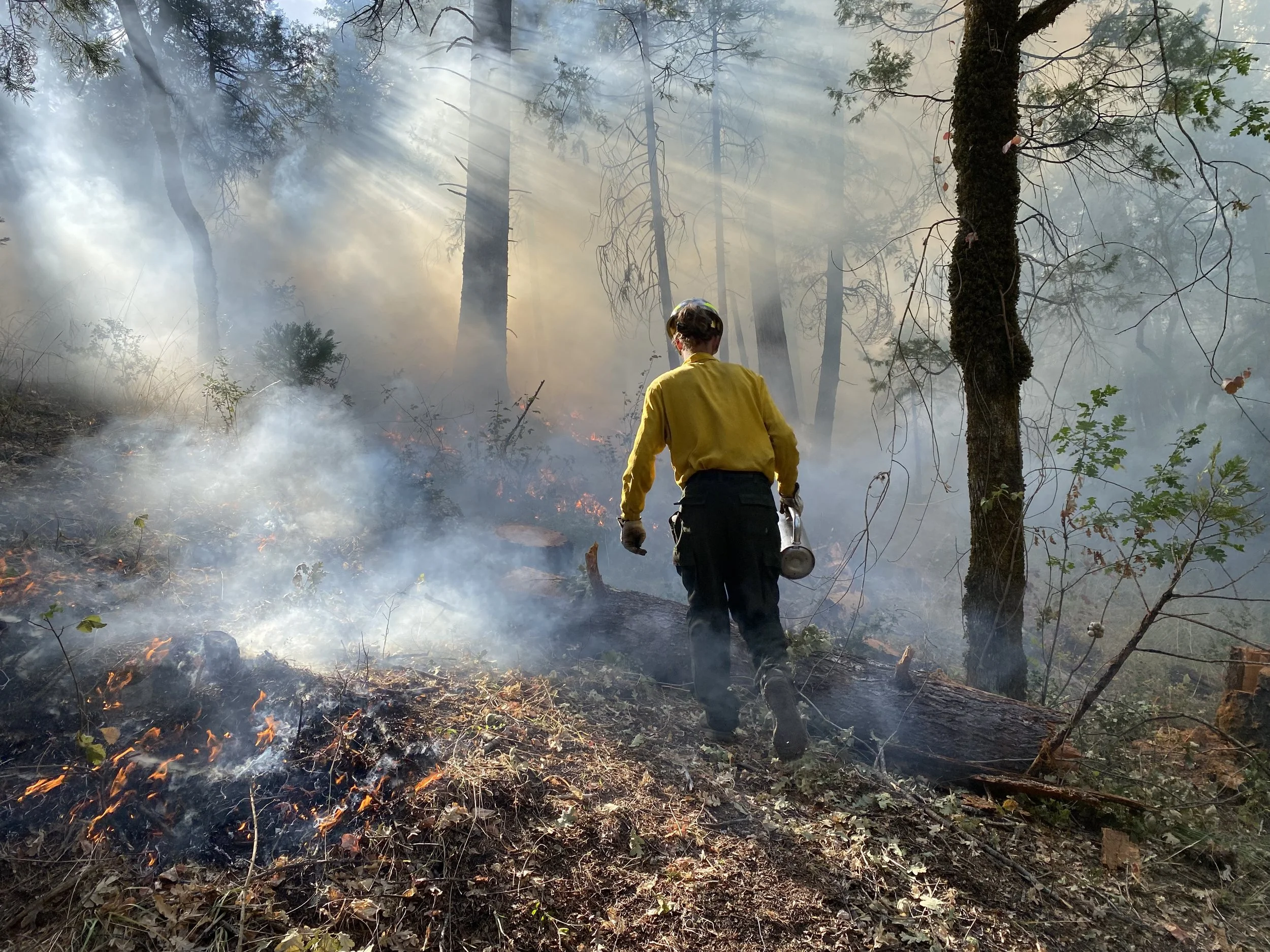
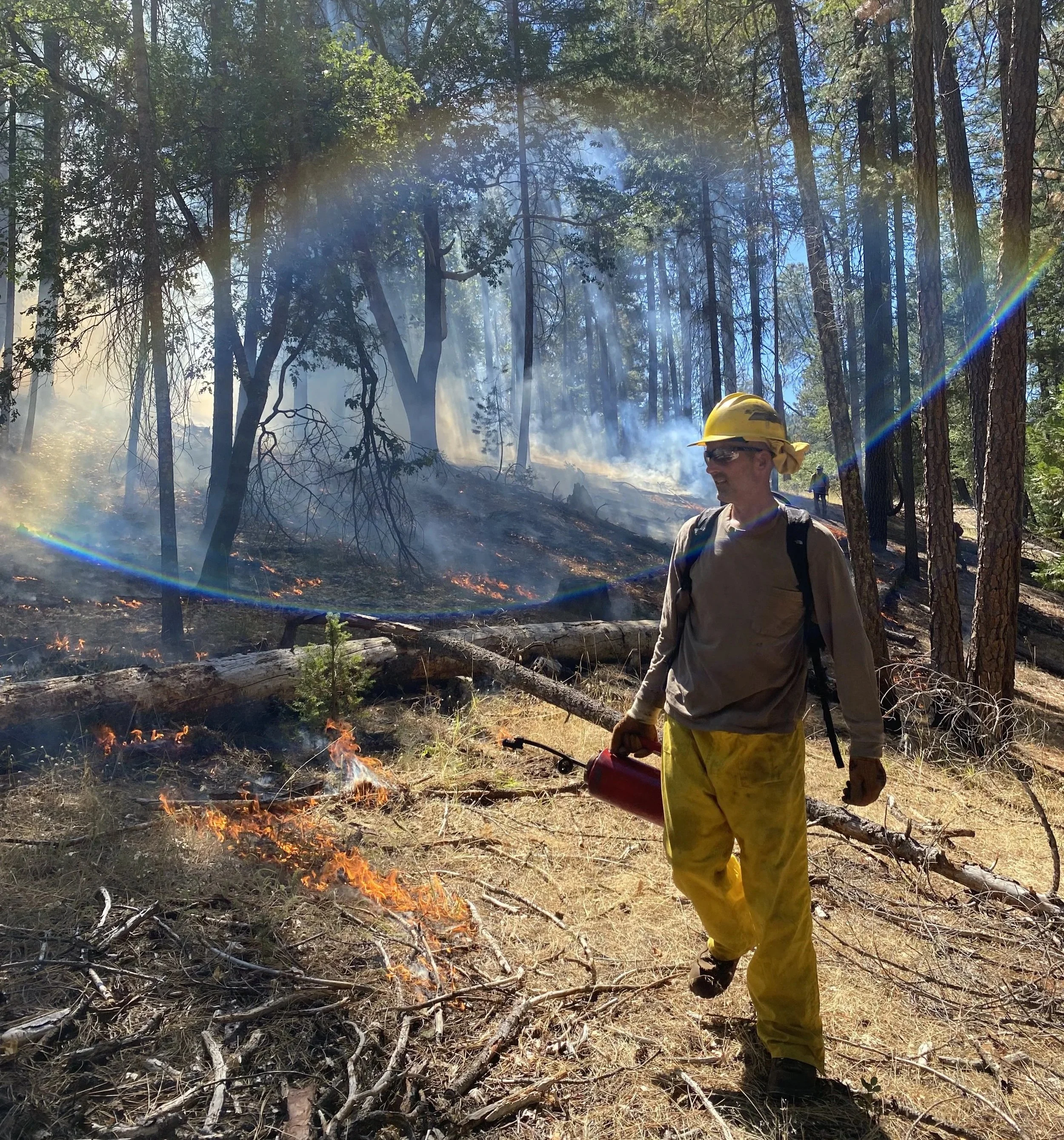
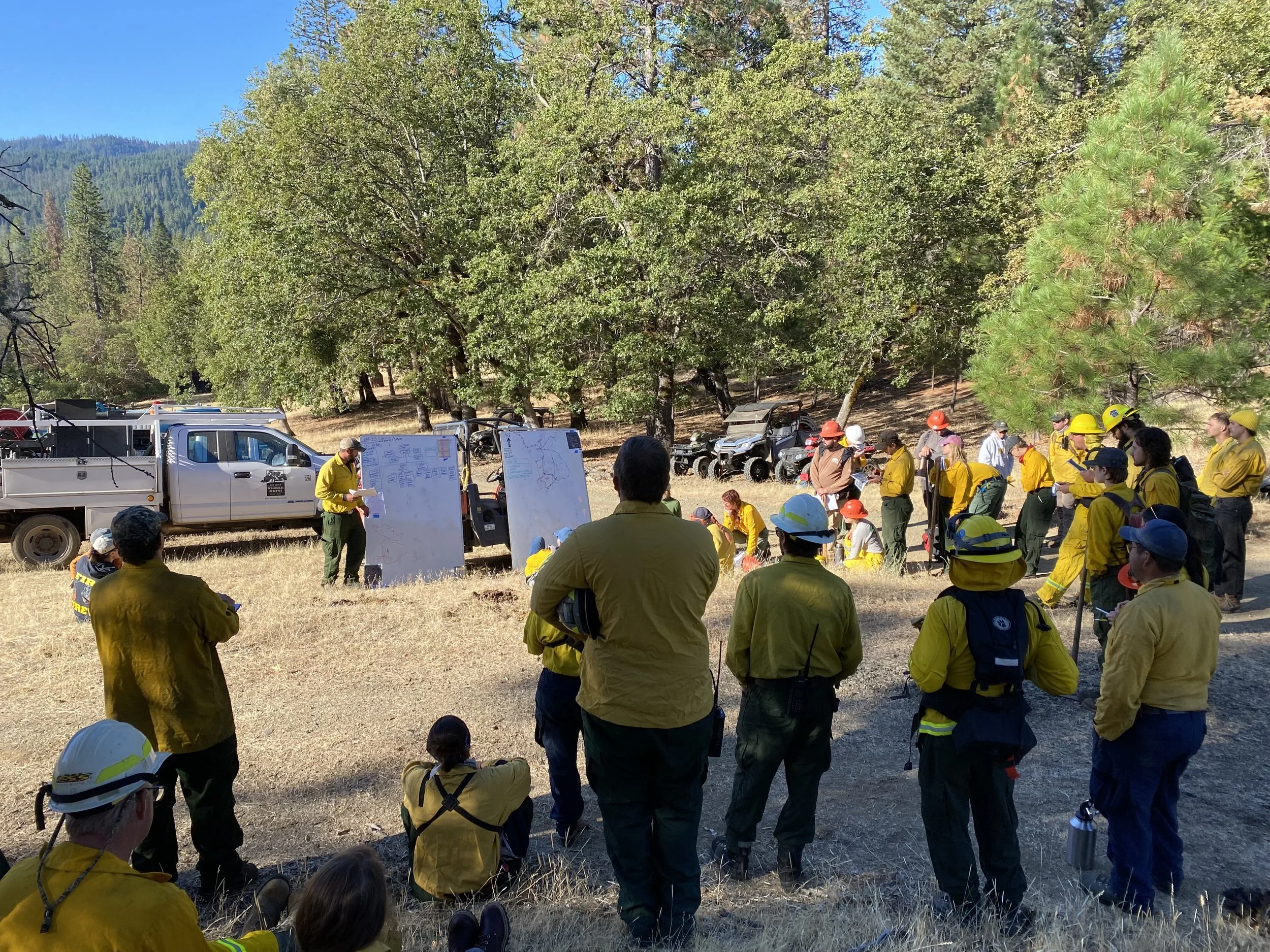
When we began working with the WRTC in 2011, prescribed burns had never been funded in Trinity County before. After several years of planning, we carried out our first prescribed burn on the ranch in 2014. The WRTC organized the burn as a Prescribed Fire Training Exchange, or TREX: a way to train new prescribed fire practitioners and build a fire-informed workforce in California. During that first prescribed burn, we hosted a crew of about 30-40 people and burned an approximate 110 acres across Hayfork Creek over the course of a week. During that same time period, we continued to work with the WRTC to use the ranch as a home base for other prescribed burns in the area.
Several participants in that initial TREX burn at the ranch were hired into longer-term fire-focused roles at the WRTC, and we began doing regular prescribed burns on the property to continue reducing fuel load and improving forest health. At the time, this project was part of a larger push across California to move prescribed burns into the mainstream of forest management in the state; many of these early prescribed burns took place on private properties like the Bar 717.
From Fuels Management to Fire Safety
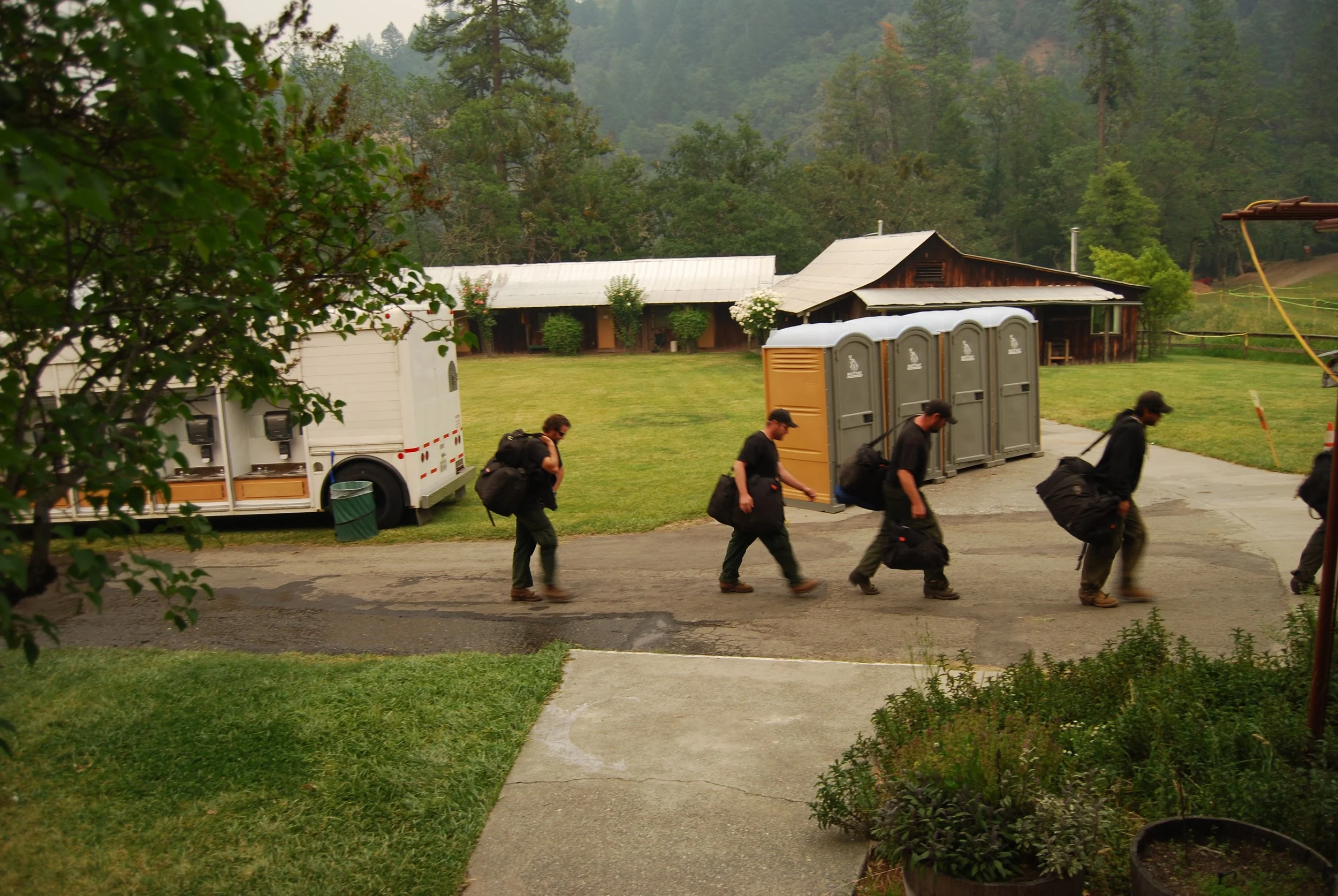
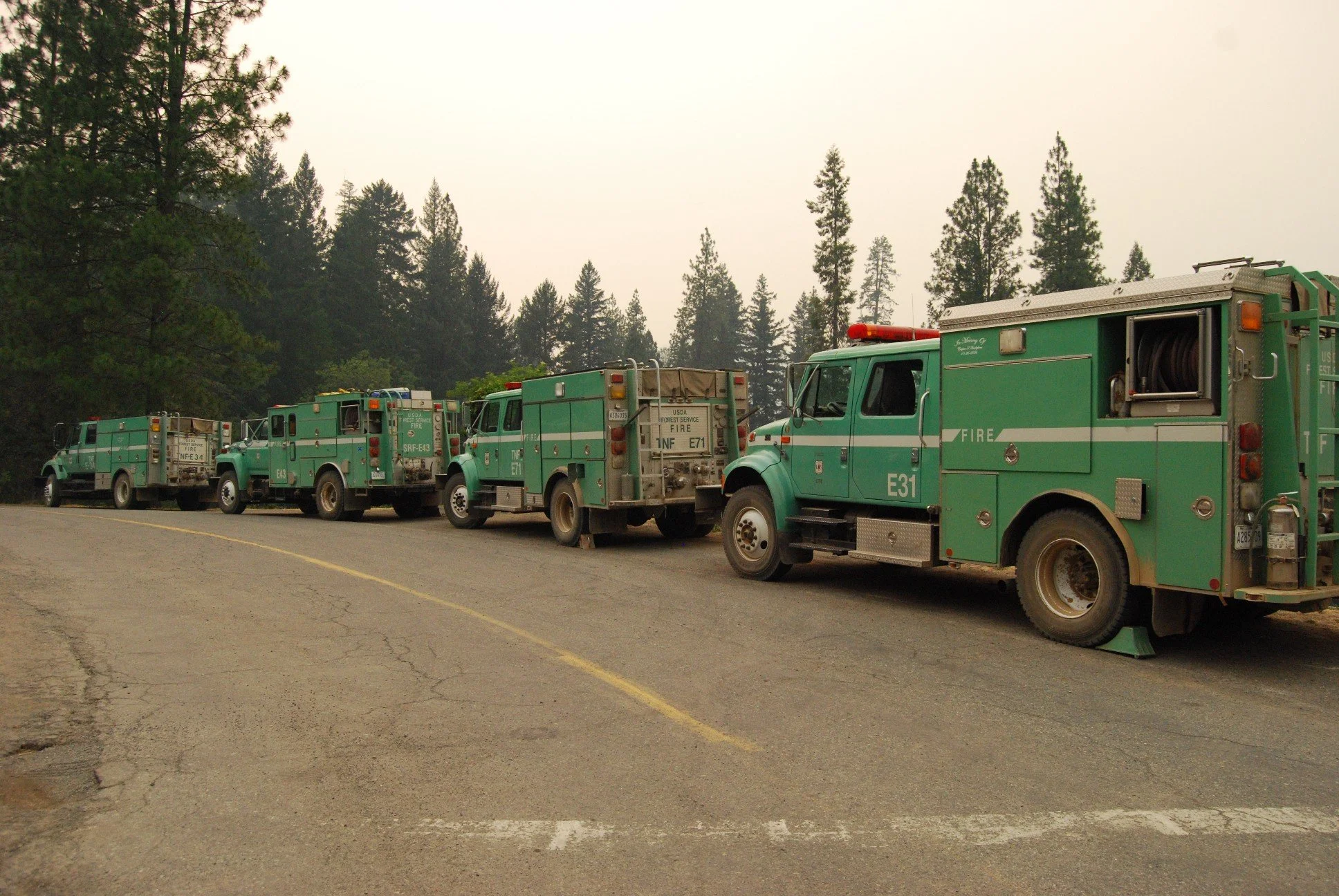
Over the last five years, we’ve continued to work closely with the WRTC on prescribed burning projects, and we’ve seen the positive impacts of prescribed fire in a significantly reduced fuel load across the ranch, as well as more productive forests and pastures. In addition to its many benefits to forest health, our fuel management efforts have also placed us in the best possible position in terms of fire safety. With our reduced fuel load, irrigated pastures, and well-maintained roads and water sources (like the pond at Main Camp), the ranch is a highly effective fire-safe zone. On more than one past occasion, lightning-caused fires in adjacent National Forest areas have burned to the edge of the ranch and stopped once they reached our treated areas – meaning that the work we’ve done has created strong fire breaks. In years past, due to our extensive fire safety preparations, the ranch has been used as a fire camp by the Forest Service to house firefighters in the area, a resounding vote of confidence for the safety that the ranch provides.
Our work is also aligned with broader fire safety efforts in our local community of Hyampom, which is very proactive when it comes to fire mitigation and preparedness. Following 2008, our director & owner, Kent Collard, helped organize the Hyampom Fire Safe Council (FSC) alongside other members of the community, and they went on to build the Hyampom Community Wildfire Protection Plan and spearhead extensive grant-funded fuels reduction efforts along miles of roads in the area. The FSC continued to meet with the Forest Service and provide input for what has become the present-day Hyampom Project: a 10,000 acre focus area near the Bar 717 and town of Hyampom that will undergo extensive fuels management work, including brush clearing, roadside and ridge-top fuel breaks, and prescribed burning. This project began just last year, and we’re excited to see this work continue in the future.
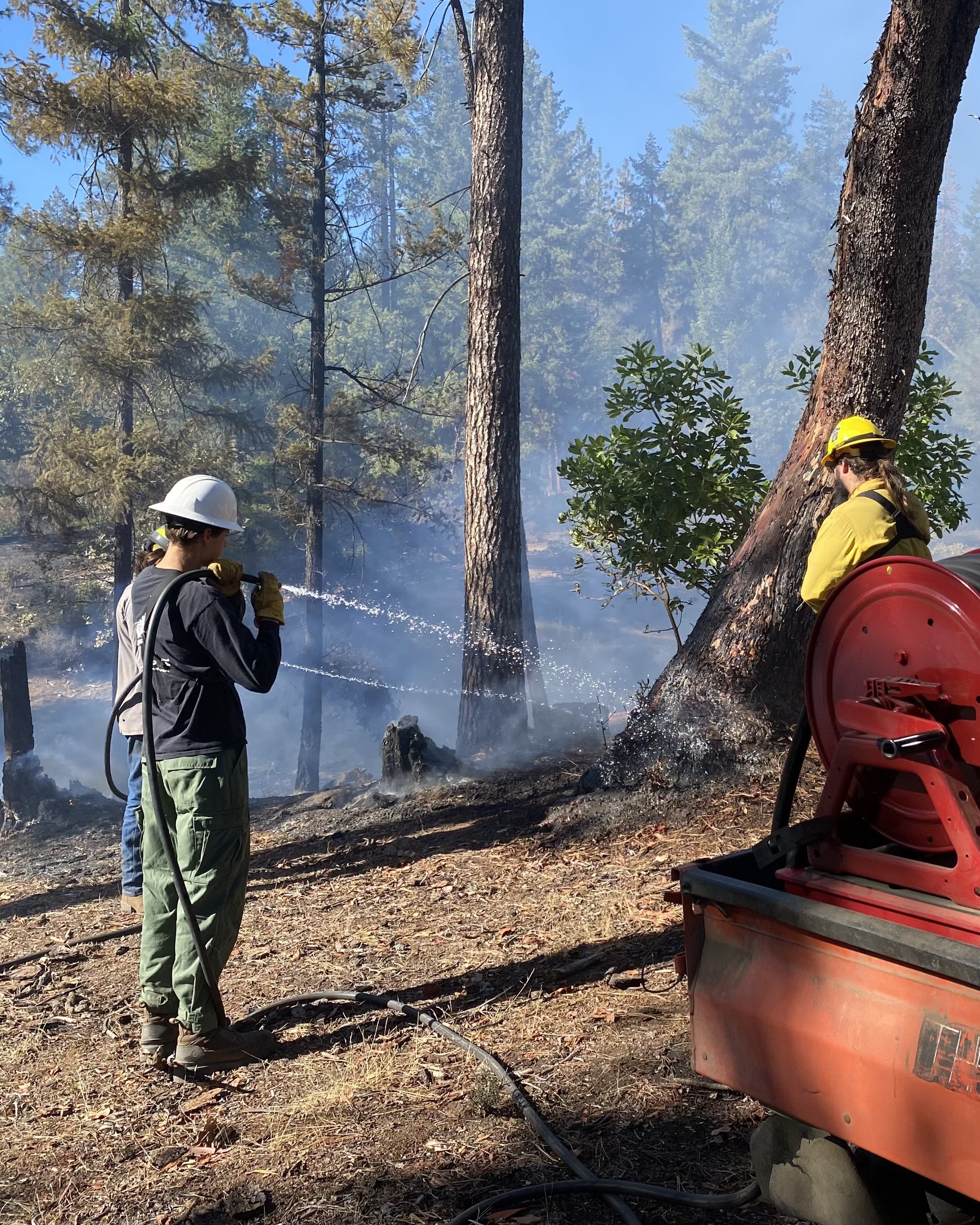
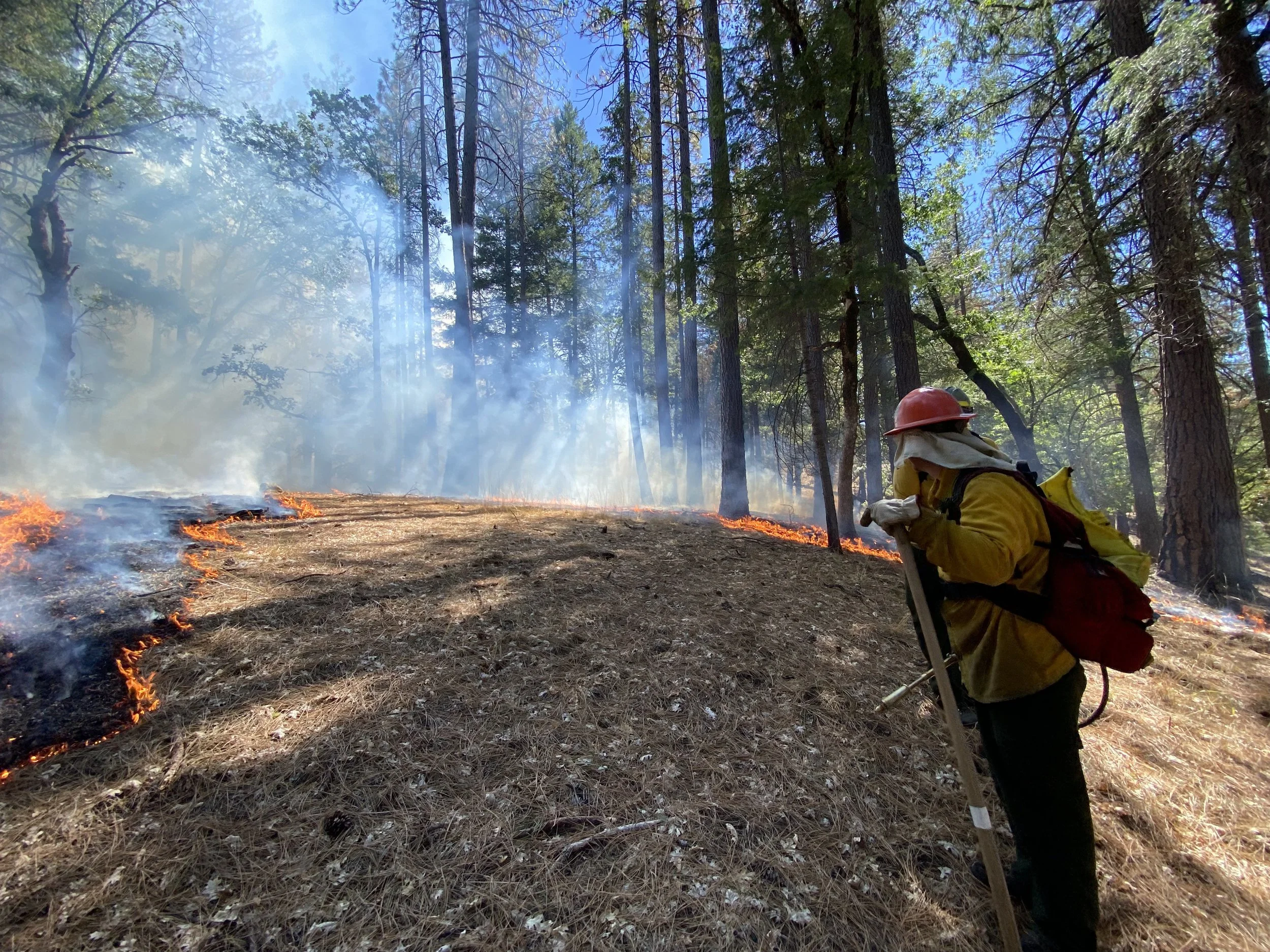
As we now know, wildfire is a reality in our region, both as a natural part of the ecosystem and as an increasing risk in recent decades. Though fire suppression policies have contributed to that risk, the reintroduction of prescribed fire – combined with our efforts in maintaining pastures, roads, and water sources – has been an invaluable tool in mitigating the risk of wildfire while also improving the health of the land. Perceptions of fire have shifted greatly over time, influenced by changes in land management philosophy, climate, and subsequent wildfire severity. The strict fire suppression practices of the 20th century were motivated in part by a desire to reduce the destructive impact that wildfires can have, and this continues to be a concern today. However, the movement of prescribed fire into the mainstream of forest management has been an important step in re-framing fire as an essential tool for land owners, and in promoting a more holistic understanding of wildfire’s ecological role.
For us, the use of prescribed fire demonstrates beautifully that what’s good for the forest is good for those that live in it – and ultimately, isn’t that exactly what conservation is all about?
Next week, we’ll be shifting our focus to a discussion of water quality and watershed health on the ranch and in the surrounding region. But don’t worry — it won’t be a huge shift, because (spoiler alert) the health of our watersheds has a lot to do with the health of the surrounding forests and ranch lands. Stay tuned to learn about erosion, runoff management, fish hatcheries, salmon runs, and more. See you next Friday!
