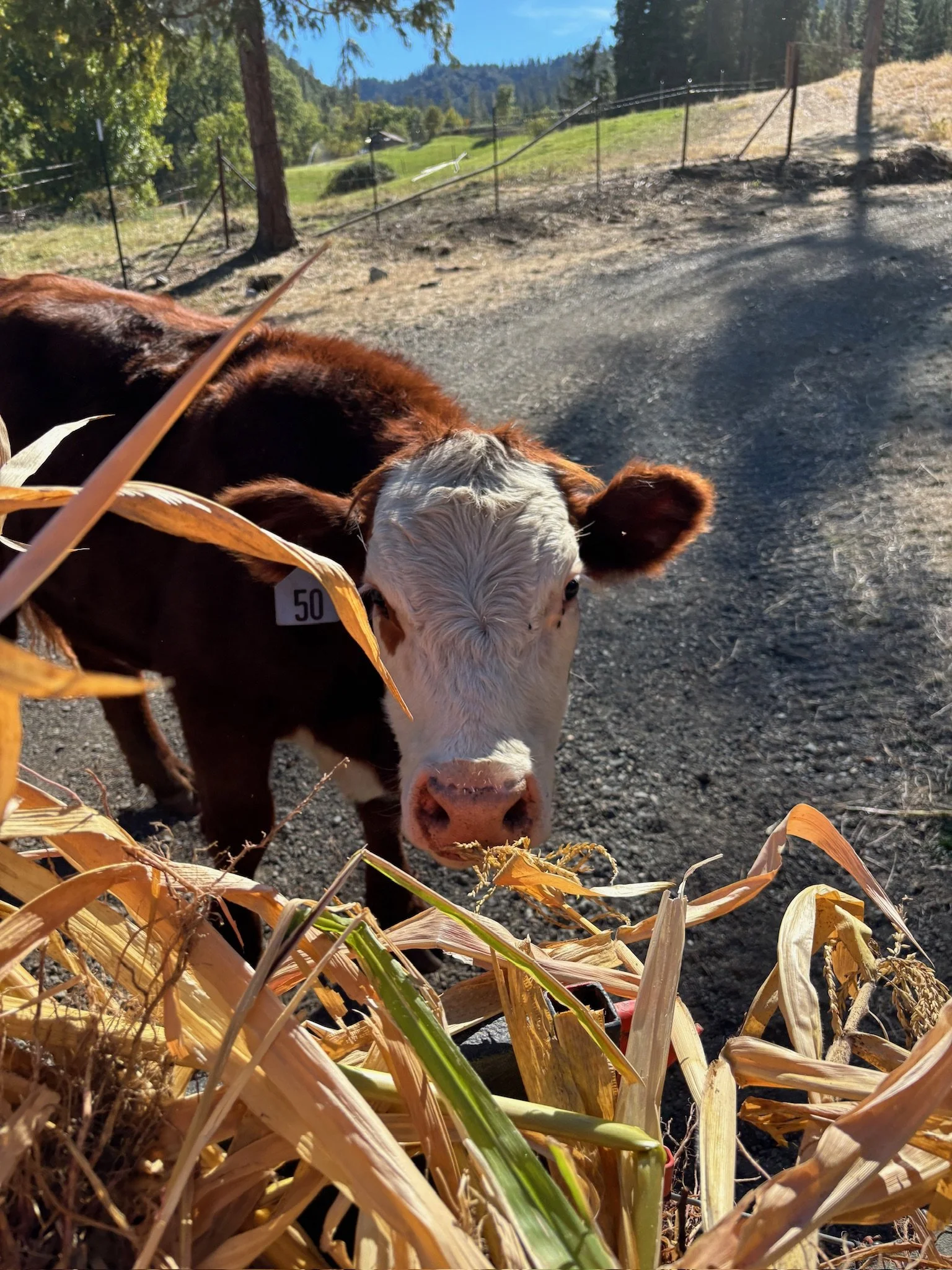
It’s somehow already the end of March, and we’ve reached our fourth and final installment (for now) of our #ConservationAtCamp series! This week, we’re focusing on the third piece of our land stewardship trifecta: grazing and livestock management.
Over the last two weeks, we’ve discussed fuels management and watershed health at length, as well as the ways those issues and their related projects are deeply interconnected. Fire mitigation and water quality are two central principles that guide our land management decisions, and as we explored what impacts water quality in our last post, we learned that the answer is…well, pretty much everything. Road building, erosion control projects, fuels reduction, re-planting of previously logged areas, and water use practices all affect runoff into our waterways and ultimately shape the health of the watershed. Grazing livestock is no exception: cows, horses, and other domesticated animals inevitably make an impact on the environment, and managing that impact sustainably is an important responsibility of all ranchers and farmers.
Ranching and Farming in Trinity County
As we’ve covered in our previous installments, European settlement in the Trinity County region began in the mid-1850s with the discovery of gold. Mining initially took center stage as the county’s primary industry, but tapered off towards the end of the 19th century and ended for good during WWII. Logging quickly rose to take its place, with the industry booming between the 1940s-1990s. However, throughout the region’s history, agriculture has also been a consistent and important part of the economy and everyday life.
Early European settlement was characterized by small, rural, and generally self-sufficient homesteads, such as the original inhabitants of what is now the Bar 717 Ranch. As the mining industry expanded in the latter half of the 19th century, so did the region’s agricultural market. Hayfork Valley and neighboring Hyampom possessed large amounts of arable land, and these areas historically supplied the majority of the food consumed by the rest of Trinity County. Farms and ranches grew and sold grains, vegetables, eggs, dairy products, and meat; sheep were grazed on open range, as well as cattle once the area was further developed and irrigated. With growing demand for meat during the mining boom of the 1880s, the cattle industry in particular became especially prominent.
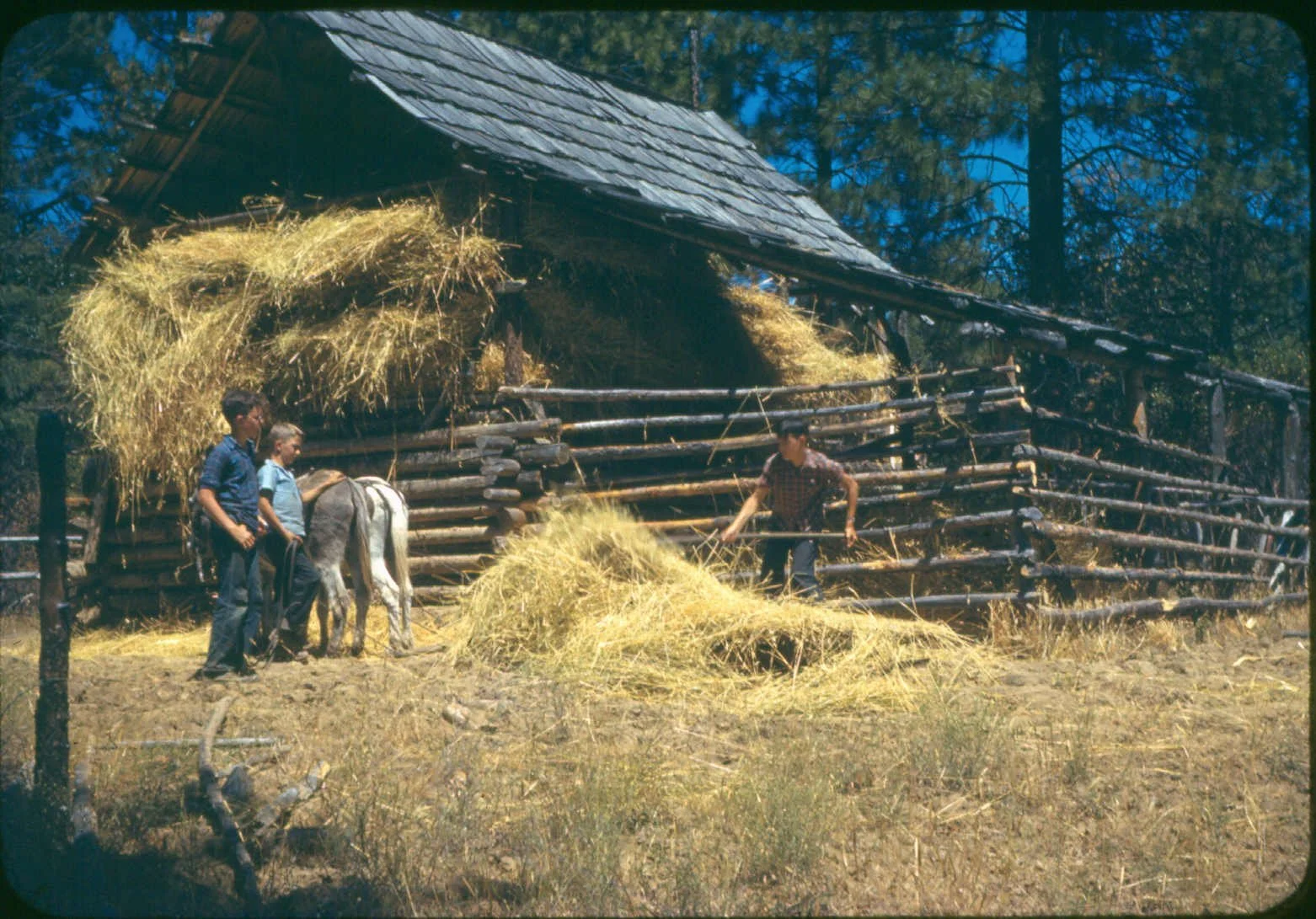
Pitching hay at the ranch (date unknown).
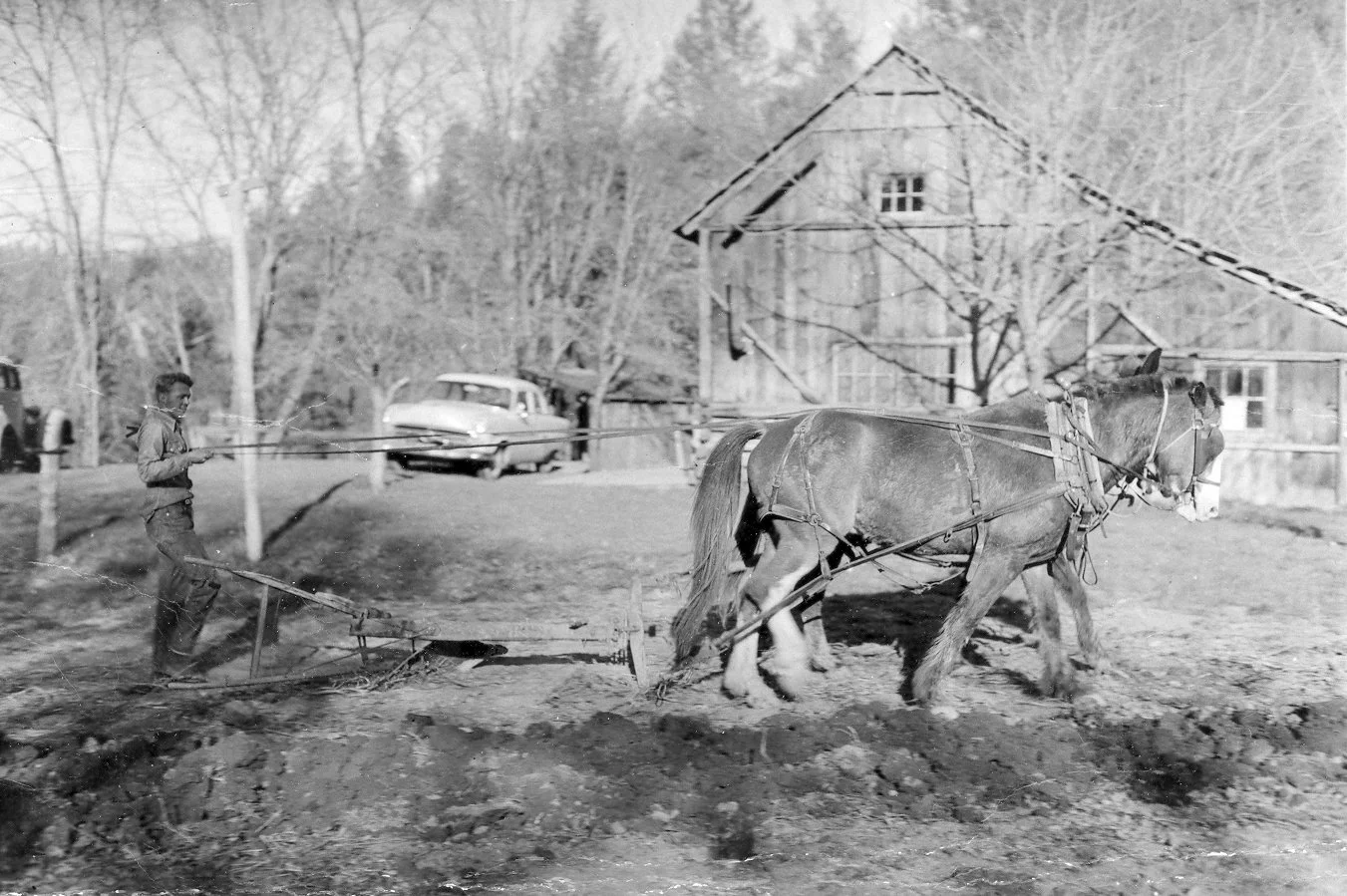
Plowing with a draft horse team at the ranch (date unknown).
Into the 1930s and pre-WWII period, the Hayfork Valley and Hyampom area continued to be characterized by small farms and ranches that usually featured a blend of orchards, livestock, and gardens. Hay and alfalfa were also commonly grown as feed for livestock. Following WWII, as agricultural practices across the country grew more industrial, traditional small-scale ranching and farming in the area declined and the economy shifted more fully towards logging. Today, some small-scale ranches and farms remain in the region, such as the Bar 717 Ranch. Like the homesteads of the past, our ranch hosts a blend of orchards, gardens, and livestock, including chickens, goats, pigs, cattle, and horses.
Impacts of Livestock on the Landscape
Over the course of many decades, cattle ranching and dairy farming as an industry has faced global criticism for its negative environmental impacts: increased greenhouse gas emissions, overgrazing, and deforestation. Overgrazing in particular looms large in American history and consciousness. The Dust Bowl of the 1930s was catalyzed by multiple severe droughts and compounded by excessive tilling and grazing of cattle across the Great Plains, which removed the topsoil’s protective anchor of grasses and left the region prone to extreme wind erosion.
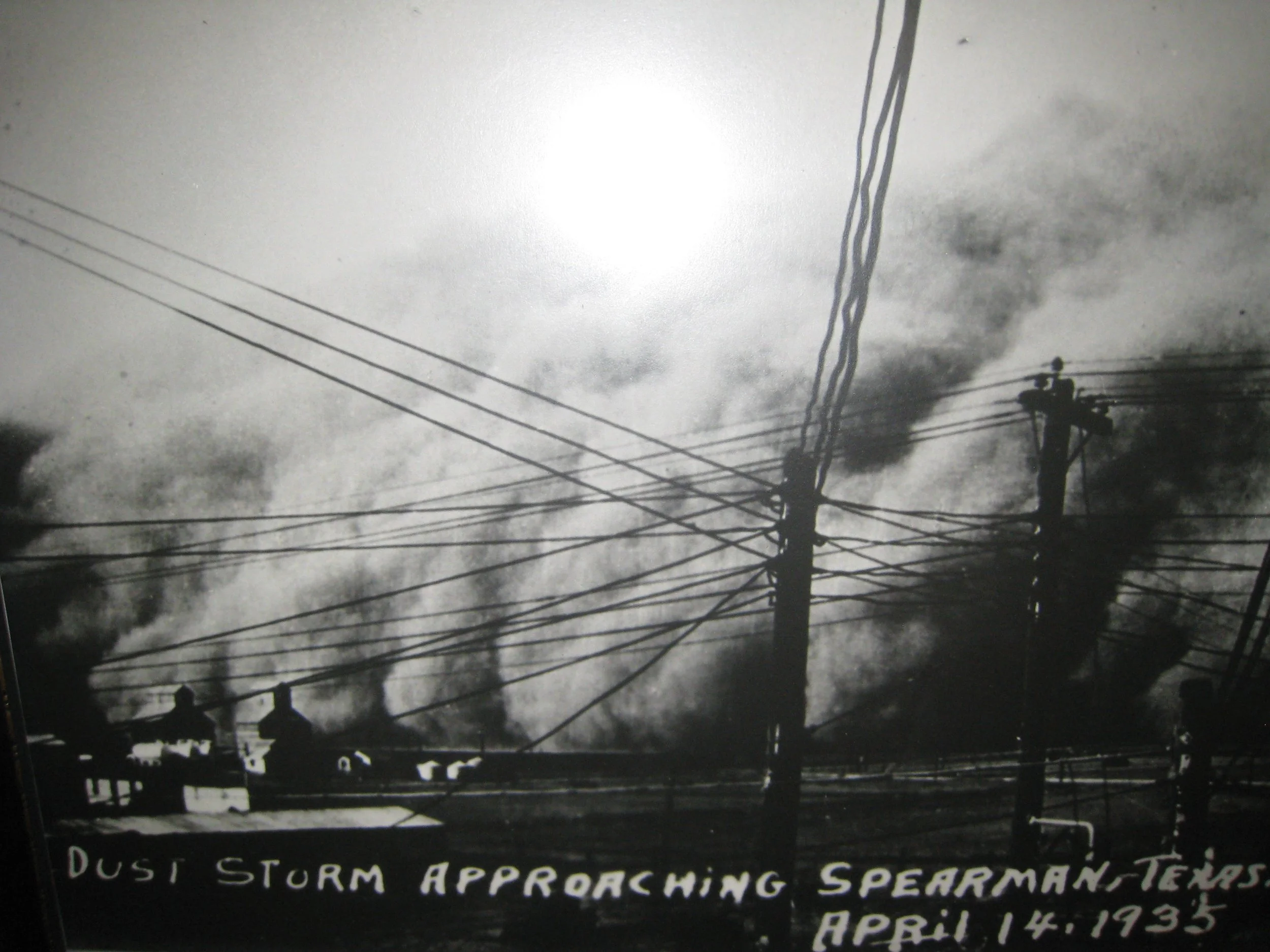
"Dust Bowl 1935" by MyEyeSees is licensed under CC BY-NC-ND 2.0.
Decades earlier, a similar story had already played out in the western states: by the 1880s, approximately 40 million cattle grazed on the arid, open rangeland of the West, and by the final decade of the 19th century (compounded once again by severe droughts) the region faced heavy overgrazing that resulted in livestock death and bare, eroded soils. These are examples of the impacts of livestock on the landscape at its worst: large numbers of domestic animals alongside human mismanagement placing more demand on the environment than it could support, with dire consequences.
However, while the environmental impacts of large-scale cattle ranching must always be carefully considered, appropriate management techniques – ones that consider the natural characteristics and carrying capacity of a landscape, and prioritize long-term soil health – can shift this narrative in a more positive direction. Consider the Great Plains: in the early 1800s, 30-60 million bison roamed throughout North America, with historical anecdotes recalling a time when the bison herds on the plains were so vast that their movement caused a sound like distant thunder. Why, with such large numbers of grazing animals, did the presence of the bison not result in the extreme overgrazing seen during the Dust Bowl?
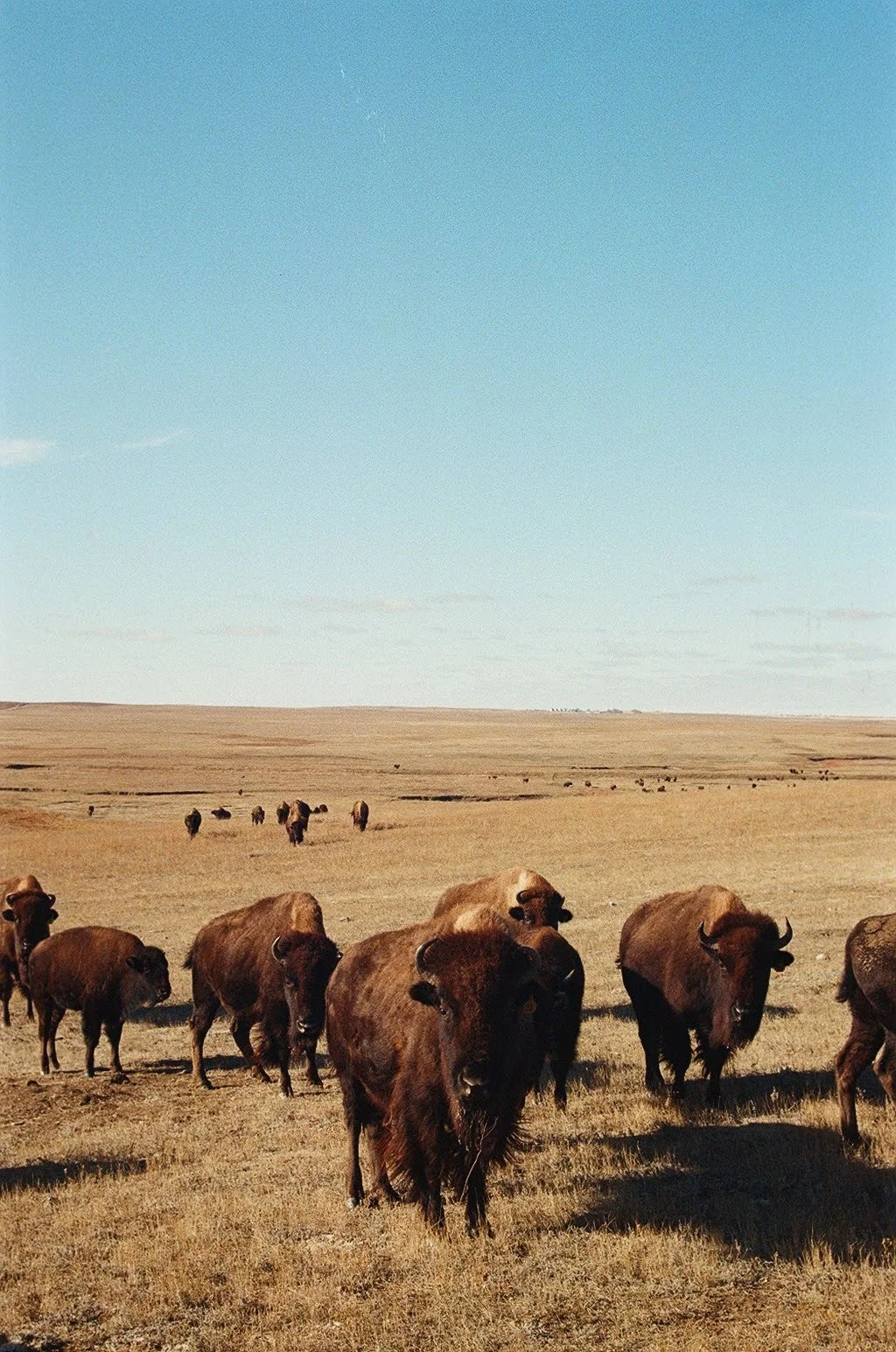
Bison in South Dakota. Photo by Sierra Macdonald.
The answer lies in how they grazed. Bison are native to North America and evolved alongside the rest of their ecosystem; they were not confined in fenced pastures, and instead roamed freely across large distances throughout the year. Rather than grazing in one place until no grass remained, bison moved frequently, allowing the grasses a chance to recover with fresh growth and re-strengthened root systems. As bison herds moved, they also helped return nutrients to the soil through manure, aerated the soil with their hooves, and spread seeds across the grasslands. Their grazing patterns across the plains – a landscape, like Northern California, that evolved alongside wildfire – also minimized fuel accumulation, ensuring that the fires that did occasionally sweep across the landscape were slower-burning and less destructive.
Domestic cattle are not, of course, native to any landscape in North America. Though they are closely related to bison, they do not have the same behaviors or instincts as bison do, and furthermore it’s no longer possible for large herds of grazing animals to roam as bison once did due to fencing, development, property laws, and differences in environment (the mountains surrounding the Bar 717 are, after all, very different ecologically from the Great Plains). However, it is possible to take what we have learned from the bison, and apply that to our own grazing practices to not only minimize negative impacts but also use our livestock to improve the health of our land.
Our Property & Practices
Our property spans 450 mountain acres – steep hillsides, small pasture areas, and thick forest. We are bordered on all sides by the Shasta-Trinity National Forest – which is managed, of course, by the United States Forest Service (USFS). Most of the necessary leases and permits for the work we do at the Bar 717, whether that’s water pipeline permits, fuels management projects, backpacking permits, or grazing leases, come through the USFS. We keep a herd of sixteen cows that graze across the property, and we raise our own beef and pork for use at camp. Alongside our produce gardens, we’re very proud to be able to provide meat for our food program that we know has been raised well and sustainably. Because we have horses and cattle living at the ranch year round, and because of the relatively small size of our property, careful grazing planning is an important part of the care of our animals and our conservation efforts.
At the Bar 717, we practice rotational grazing: manually and frequently moving livestock between multiple, often relatively small, grazing areas. Rotational grazing aims to mimic the impact that native herbivores would have on the landscape. Moving between multiple grazing areas throughout the year means that we are able to benefit from the positive impacts of grazing and mitigate the negatives. The grass has a chance to recover and root systems are never critically damaged, reducing risk of erosion and increasing the long-term vitality and resiliency of the grass. Soils are aerated and fertilized as the cattle move, and our herd helps eat down fuel on the forest floor and in pastures, aiding in our human-led fuel reduction efforts. Our non-bovine residents help with this, too: our horses are also grazed rotationally depending on the season, and our goats have been deployed frequently in recent years to control growth of blackberry bushes on the property.
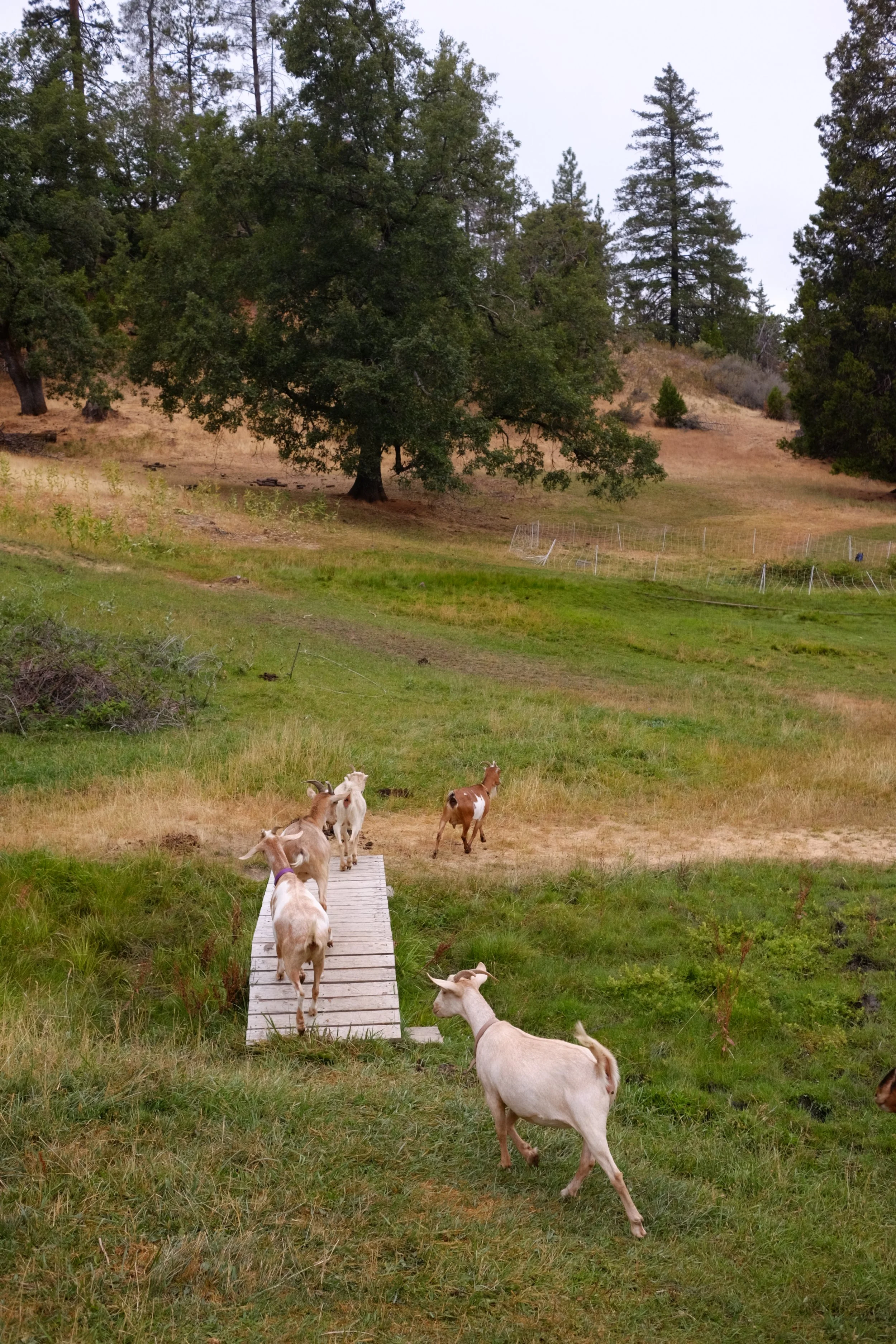
Rotational grazing is in direct contrast to stocked grazing, or set stocking: the practice of “stocking” a large area with a set number of animals for a long period of time. Set stocking increases the risk of overgrazing and soil degradation, as animals graze the same areas of forage over and over again with no chance for it to recover, eventually causing root system collapse and exposing bare soil. This grazing method was common in the years leading up to the Dust Bowl and prior to the rangeland collapse experienced in the late 19th century American West.
By using rotational grazing practices, we’re able to make the most out of every acre on the ranch – and then some. Each year from May-October, through a grazing permit granted by the USFS, we graze our cattle on federally-owned land just outside the ranch’s privately-owned border. The herd is turned out in spring, enjoys the warmer months eating fresh mountain grass, and is gathered back onto ranch property come fall. Meanwhile, during the summer months, our horses rotate through pastures from Barn Hill to the Homestead. Once fall comes and the cattle return, we utilize the whole property for both horses and cattle: across Hayfork Creek to the Bar 7, and back to Main Camp. Rotational grazing is a complex and sometimes labor-intensive dance – grazing plans look different each year depending on rainfall and how much forage has grown for the animals to eat. However, when done correctly, it holds an incredible amount of potential to support the health of our forests and pastures. Because of that, livestock management is not just something we have to carefully consider from a sustainability perspective – it’s another powerful tool to be used in the interest of conservation.
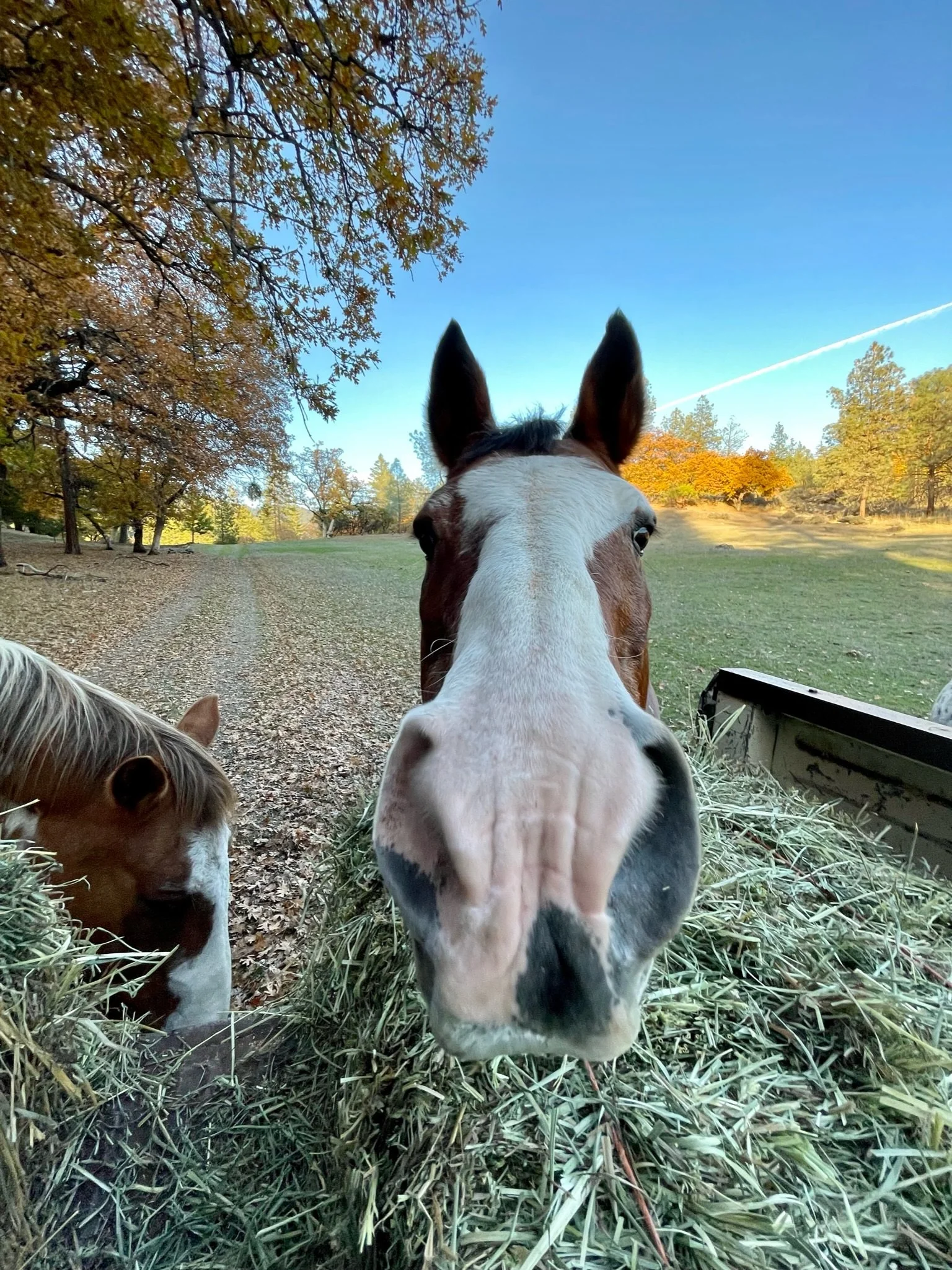
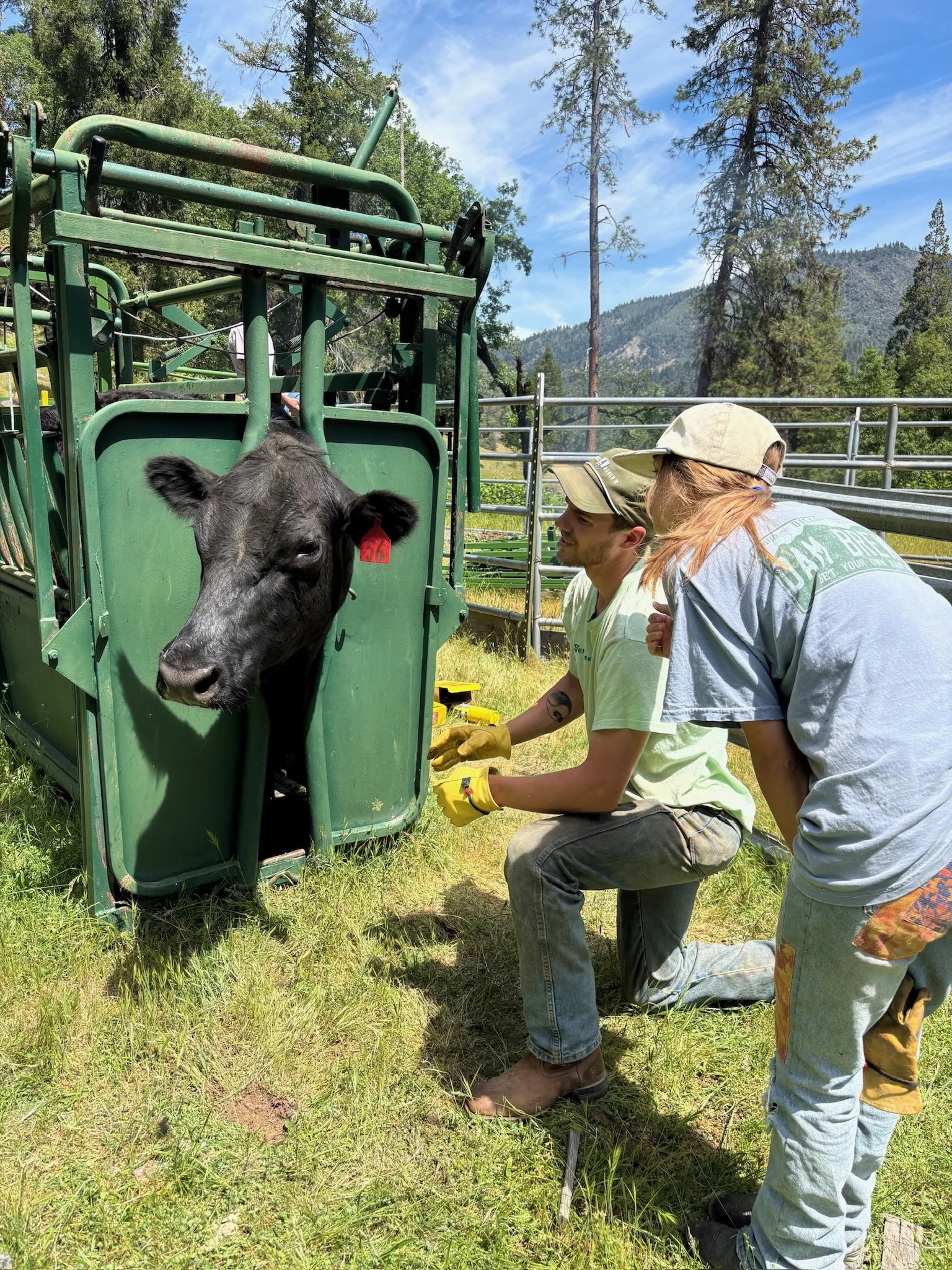
As you’re likely beginning to see, each of the topics we’ve covered for the past three weeks – prescribed fire, watershed restoration, and rotational grazing – are part of an intricate set of factors that we manage and employ in tandem to maintain the health of our land. Prescribed burns help bring our forests back into balance, reducing wildfire risk, improving forest health, and increasing available feed for livestock. They also help reduce the risk of erosion and sedimentation into our waterways, improving our water quality and supporting our other watershed restoration efforts, such as installing fish hatcheries in Hayfork Creek. Finally, rotationally grazing our livestock takes advantage of the additional forage made available by prescribed burns, further increases the resiliency of forest floor and pastureland by mimicking the patterns of native herbivores, and reduces the risk of erosion into nearby waterways by strengthening grass root systems on the mountainsides.
By definition, conservation work is mutually beneficial for both human and non-human inhabitants of a landscape; it relies on deep knowledge of an ecosystem and takes its cues from nature. Prescribed fire and rotational grazing are particularly apt examples of this, both using knowledge of natural patterns to help restore ecosystems and re-establish positive cycles. At the Bar 717, cooperation, resourcefulness, and respect for the land guide everything we do. Though we most often discuss these values in the context of our summer camp community, we believe that our conservation work reflects them just as strongly.
Conservation At Camp
Though this series was intended to highlight the working ranch aspect of the Bar 717 that’s less often in the spotlight, we chose the series title – Conservation At Camp – for two reasons: we wanted to speak directly to our wonderful summer camp audience and invite you to learn something new about the ranch, and because we wanted to make it clear that our conservation work is inextricably connected to our summer camp work.
In the late 1800s and into the 1930s when the Gates family arrived and later established a summer camp, the basic principles of conservation were already taking place: homesteaders relied on knowledge of the natural world to grow, fish, hunt, and forage for food in these mountains, and sustainability was a necessity to ensure that a living could be made from the land year after year. Camp Trinity’s founder, Grover Gates, grew up immersed in that lifestyle and surrounded by the wilderness of Trinity County, and the values that he learned have remained our guiding principles. Our conservation work in the present, and our interest in employing methodologies like prescribed fire or rotational grazing as the decades have passed, is a natural continuation of the traditions that have shaped the Bar 717 since the beginning.
Each summer, we’re not directly instructing campers on how to develop a rotational grazing plan or monitor the dissolved oxygen levels in our creeks (though if this sounds fun, please do reach out to us). What we are doing, however, is inviting campers to be immersed in life on the ranch, where the principles of conservation work are just part of the everyday. Feeding animals, tending gardens, baking bread, chopping firewood, learning about the wildlife that we share the ranch with, and appreciating the beauty of our natural surroundings flow from the same values that inform our conservation projects: cooperation, resourcefulness, and respect for the land.
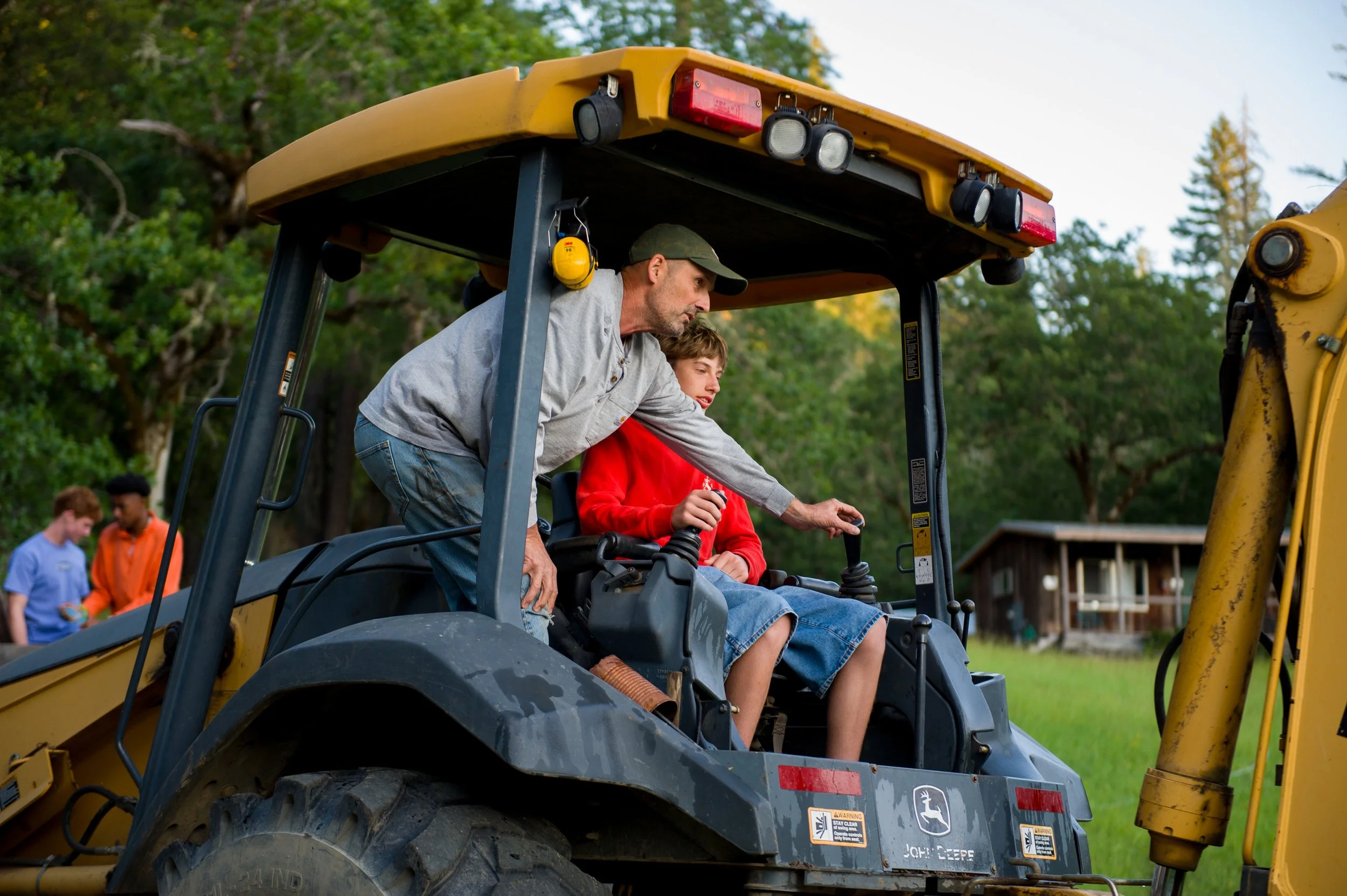
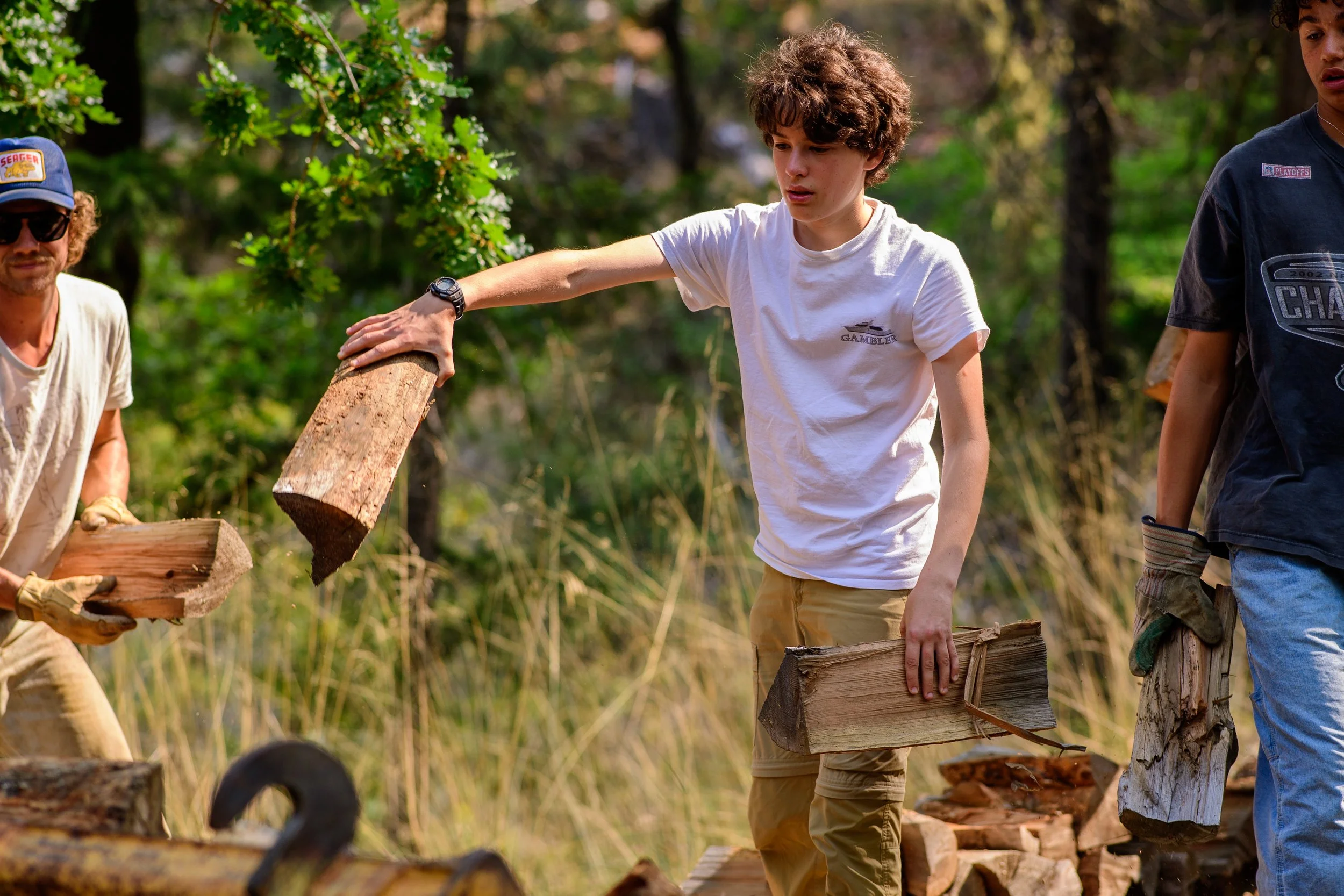
Living in community with others, and having meaningful face-to-face interactions without the barrier of a screen, is also something that’s deeply important to us. Each summer, we watch kids (and staff) thrive in the absence of technology, and we’re reminded that the hyper-connectedness of living in a digital age can sometimes increase feelings of isolation and disconnection. At camp, we’re aiming to reconnect kids to their human community, but also to the feeling of living in community with nature: counting the stars, listening to the wind in the trees, and enjoying the refreshing feeling of jumping in a cool creek on a hot day. We hope that all of our campers will learn to love the ranch and the natural world as much as we do, and see it as something to appreciate, respect, and ultimately conserve.
We hope you’ve learned something new throughout the course of this series, and thanks for following along. We’re excited to continue sharing about this side of our work in the future, and we can’t wait to see you at the ranch this summer!